

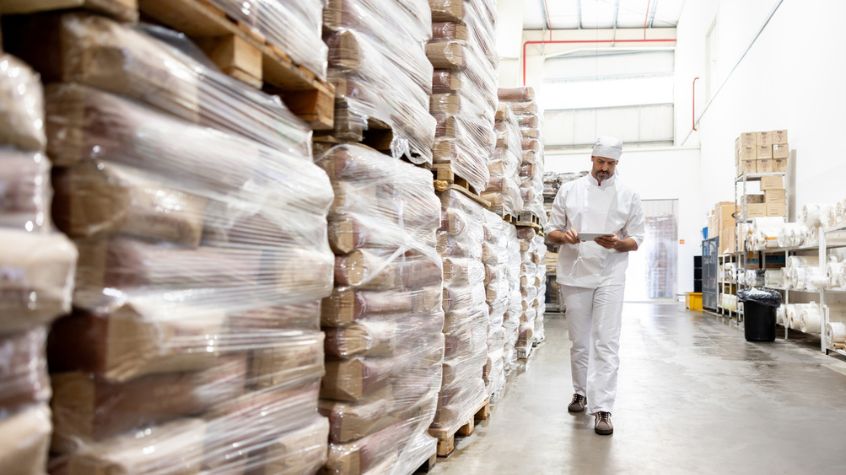
The best sustainable packaging options for shipping and storage are right-sized corrugated boxes, recyclable paper packaging, molded fiber inserts, recycled-content films, reusable transport packaging, and properly designed flexible packaging. The right choice depends on the product’s weight, fragility, moisture sensitivity, storage conditions, shipping distance, and available recycling infrastructure.
Sustainability should never come at the expense of product protection. Packaging that fails during transportation can create damaged products, returns, additional shipments, and unnecessary waste. The goal is to select sustainable packaging materials that use resources efficiently while delivering the required level of protection.
Businesses can begin by reviewing SPS’s complete Materials Overview and evaluating each option against their operational and sustainability goals.
What Makes a Packaging Option Sustainable?
Sustainable packaging reduces environmental impact across the package’s lifecycle while still protecting the product and supporting efficient operations. According to the EPA’s guidance on sustainable packaging, lighter and more efficient packaging designs can help businesses conserve materials, reduce waste, and potentially lower costs.
Effective sustainable packaging solutions generally prioritize:
- Using less material without reducing package performance
- Incorporating recycled or responsibly sourced content
- Choosing materials that can be recycled in relevant markets
- Reducing empty space and unnecessary package weight
- Preventing product damage, spoilage, and returns
- Improving transportation, storage, and handling efficiency
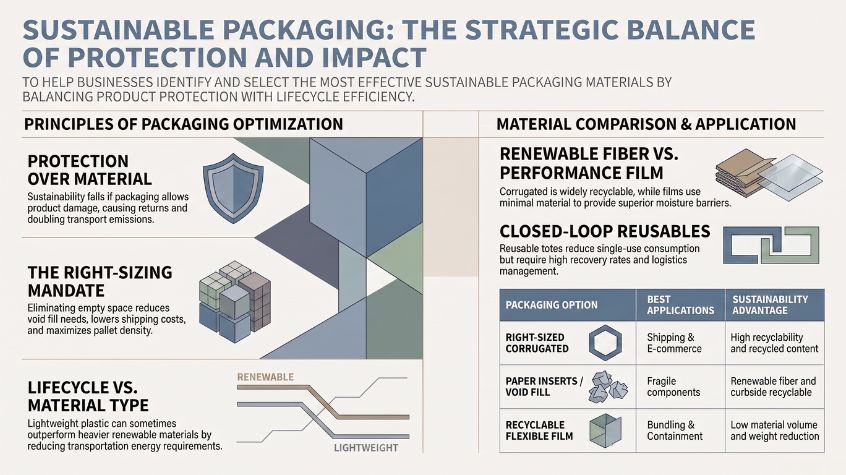
No single material is automatically the most sustainable choice for every application. A lightweight plastic film that prevents food spoilage, for example, may create a better overall outcome than a heavier alternative that requires more energy to transport. The entire packaging system must be evaluated.
Which Sustainable Packaging Options Are Best for Shipping?
Shipping packaging must withstand vibration, compression, drops, temperature changes, and repeated handling. Several options can provide reliable protection while supporting sustainability objectives.
Right-Sized Corrugated Packaging
Corrugated boxes remain one of the most common forms of sustainable shipping packaging. They are lightweight, widely recyclable, available with recycled content, and adaptable to many product dimensions.
Right-sizing is essential. An oversized box requires additional void fill, occupies more warehouse space, and reduces the number of packages that can fit on a pallet or truck.
Paper Inserts and Void Fill
Paper cushioning, dividers, partitions, and custom inserts can protect products while reducing reliance on mixed-material packaging. SPS offers a range of inserts and paper packaging that can be designed around specific product dimensions.
These protective packaging materials are particularly useful for:
- Separating components within a carton
- Preventing products from shifting
- Protecting corners and delicate surfaces
- Creating an organized unboxing experience
- Supporting curbside recyclability when compatible materials are used
Recycled-Content and Recyclable Films
Flexible films can provide strong product containment with relatively little material. Applications may include shrink packaging, stretch wrapping, bundling, and protective overwrap.
Recyclability depends on the film’s composition and the recycling programs available to the end user. New material technologies are helping improve performance while supporting recycling goals. Learn more about how new technology by Clysar® is boosting sustainability.
Reusable Transport Packaging
Reusable totes, pallets, bins, and protective containers may be suitable for closed-loop distribution systems. Although reusable packaging can require a greater initial investment, it can reduce single-use material consumption when containers are recovered, inspected, and reused enough times.
Which Materials Are Best for Storage Applications?
Storage packaging must protect products against dust, moisture, compression, contamination, and long-term movement within a warehouse.
The best option depends on how long the product will be stored and whether it requires ventilation, barrier protection, temperature control, or food-safe materials.
Sustainable paper packaging can work well for dry products, secondary packaging, dividers, and protective inserts. Flexible bags and pouches may be more appropriate when products require a moisture or contamination barrier. SPS offers bags and pouches for a variety of product and processing requirements.
Food products may require specialized trays, bowls, lidding films, or barrier materials to maintain quality and reduce spoilage. Businesses can explore SPS’s food trays and bowls when evaluating options for food processing, storage, and distribution.
How Do Sustainable Packaging Materials Compare?
The following comparison can help businesses narrow their options before conducting application-specific testing.
| Packaging option | Best applications | Sustainability advantages | Important considerations |
| Right-sized corrugated boxes | Shipping, storage, eCommerce | Widely recyclable, lightweight, available with recycled content | Must be properly sized and rated for the load |
| Paper inserts and void fill | Fragile products, components, presentation packaging | Renewable fiber options and potential curbside recyclability | Moisture resistance and cushioning needs |
| Molded fiber | Electronics, food trays, protective inserts | Often made with recycled fiber and can replace rigid plastic | Tooling, product fit, and barrier requirements |
| Recyclable flexible film | Bundling, wrapping, product containment | Uses relatively little material and reduces package weight | Local film collection and recycling access |
| Reusable totes and containers | Closed-loop shipping and internal handling | Reduces repeated use of disposable packaging | Return logistics, cleaning, and loss rates |
| Bags and pouches | Food, parts, powders, lightweight goods | High product-to-package ratio and efficient storage | Barrier layers may affect recyclability |
| Recycled-content cushioning | Fragile or irregular products | Uses recovered material while reducing damage | Verify recycled content and disposal instructions |
How Does Packaging Optimization Improve Sustainability?
Packaging optimization involves evaluating the package within the complete manufacturing and distribution system, not simply replacing one material with another.
An optimized package uses the correct amount of material, fits the product closely, runs efficiently on packaging equipment, and performs throughout storage and distribution. SPS packaging specialists evaluate how package size, material selection, case construction, and pallet configuration affect handling and transportation.
Effective optimization can improve supply chain efficiency by:
- Increasing the number of products per case or pallet
- Reducing package weight and freight requirements
- Lowering material consumption
- Minimizing product movement and damage
- Improving packaging-line productivity
- Reducing warehouse space requirements
- Standardizing materials across product lines
For processing facilities, moving to more sustainable materials should follow a phased process that includes auditing current packaging, defining performance requirements, testing alternatives, and monitoring results. SPS provides additional steps in its guide on how to transition to sustainable packaging.
What Is the Best Sustainable eCommerce Packaging?
The best sustainable eCommerce packaging is usually the smallest practical package that can survive the distribution environment without damaging the product.
An effective eCommerce package should:
- Fit the product with minimal empty space
- Use only the cushioning needed for protection
- Be easy for customers to open
- Include clear recycling or disposal instructions
- Avoid unnecessary layers and mixed materials
- Protect the product well enough to reduce returns
Because eCommerce products may pass through multiple distribution centers and handling points, testing is critical. Eliminating protective material without validating package performance can increase damage and create a larger environmental footprint.
How Should Businesses Choose the Right Sustainable Packaging Solution?
Start with the product rather than the material. Define the package’s protective, operational, regulatory, and presentation requirements before selecting an alternative.
Consider these questions:
- What hazards will the package encounter?
- How much barrier protection is required?
- Can the package run on existing equipment?
- Is the material recyclable where customers live?
- Could the package be made smaller or lighter?
- Will the change affect pallet configuration or storage?
- Does the solution reduce total environmental impact or simply replace one material?
SPS can help businesses compare materials, equipment requirements, package performance, and supply chain impacts to develop sustainable solutions that protect both the product and the bottom line.
Frequently Asked Questions About Sustainable Packaging Options
There is no universally superior material. The best option is the material that protects the product with the least necessary resource use while supporting efficient transportation, recovery, reuse, recycling, or responsible disposal.
Not necessarily. Paper may be renewable and widely recyclable, but it can be heavier or require additional coatings for certain applications. Plastic can provide strong moisture and barrier protection with less material. A lifecycle and performance evaluation is more reliable than judging a package by material alone.
Corrugated cardboard and many uncoated paper products are commonly accepted by recycling programs. Acceptance of plastic films, pouches, trays, and other materials varies by location, resin type, coatings, adhesives, and local infrastructure.
Yes. Right-sizing, lightweighting, improved pallet density, and reduced product damage can lower material, storage, handling, and transportation costs. Results depend on the product and distribution system.
SPS combines packaging materials, equipment, engineering, testing, optimization, and lifecycle support. This integrated approach helps businesses identify sustainable packaging options that meet performance requirements while improving productivity and supply chain efficiency.