

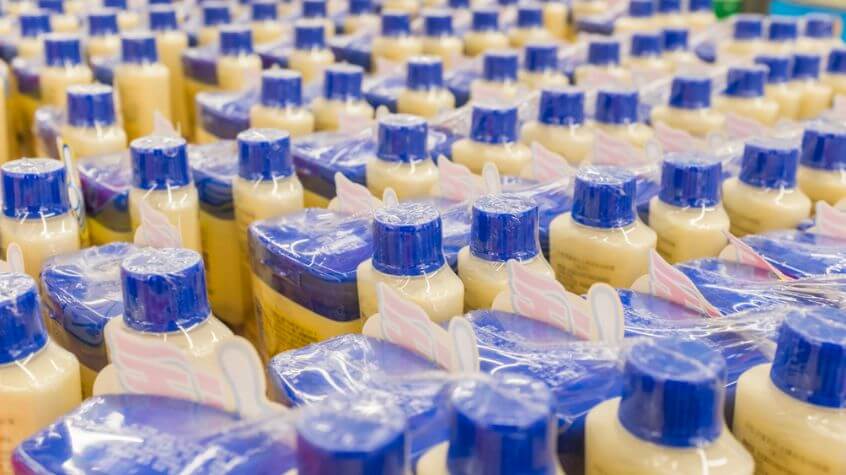
Loose or wrinkled shrink film usually happens because heat distribution, film tracking, sealing alignment, or machine setup conditions are slightly off. In automated shrink packaging systems, even small inconsistencies in airflow, conveyor speed, or film tension can create visible wrinkles shrink film operators notice immediately on finished packages.
The good news is that these problems are predictable and fixable once you understand where to look first.
Below is a practical troubleshooting guide based on the most common production floor causes.
Why Does Shrink Film Become Loose After Passing Through the Tunnel?
Loose shrink packaging film typically points to heat imbalance or incorrect conveyor timing. The film must shrink evenly across the product surface while maintaining tension from entry to exit.
Common causes include:
- Tunnel temperature too low
- Conveyor speed too fast
- Uneven airflow inside the tunnel
- Incorrect film selection for the application
- Perforation issues – trapping air in the package
How to correct the issue:
- Increase tunnel temperature gradually rather than making large changes
- Slow conveyor speed slightly to allow full shrink activation
- Inspect airflow ducts and recirculation fans
- Confirm film gauge matches the product shape and size
- Check perf wheel performance, ask SPS about per-perforated and bakery perforated shrink films
When these adjustments are made methodically, most loose film problems disappear quickly.
What Causes Wrinkles in Shrink Film Along Package Edges?
Edge wrinkles are often related to tracking or sealing alignment rather than heat alone. This is where troubleshooting shrink film tracking becomes especially important.
Watch for these symptoms:
- Wrinkles forming consistently on one side
- Film drifting during feed
- Unequally tightened corners
Typical root causes:
- Film roll misalignment
- Worn guide components
- Improper seal bar positioning
- Uneven product spacing entering the wrapper
Fixing wrinkles in shrink wrapping often starts with restoring consistent film movement before adjusting temperature settings.
How Does Film Tracking Affect Packaging Quality and Uptime?
Film tracking issues reduce both appearance quality and operational stability. When film drifts across the forming area, it creates tension imbalance before the shrink process even begins.
Signs of tracking problems include:
- Repeated wrinkles on the same edge
- Seal inconsistency across packages
- Increased scrap film usage
- Film not staying properly tensioned
- Film not staying in place and/or film tearing
Corrective steps:
- Position the film roll carefully before startup
- Inspect rollers and guides for wear and buildup
- Confirm product placement alignment on conveyors
Stable tracking helps improve output consistency and reduces operator intervention throughout the shift.
Can Seal Quality Affect Shrink Film Wrinkling?
Yes. Seal quality plays a larger role than many teams expect. If seals form unevenly, shrink forces distribute incorrectly around the product.
Improper sealing conditions often relate to how to seal shrink wrap correctly during setup and changeovers.
Seal related causes include
- Seal temperature too high or too low
- Dwell time not matched to film thickness
- Contamination on seal surfaces
- Seal bar alignment drift
If packages show wrinkles after sealing adjustments, operators sometimes attempt how to reseal shrink wrap instead of correcting upstream alignment. Addressing seal balance first usually produces better long term results.
How Do Tunnel Conditions Influence Shrink Performance?
Shrink tunnels must apply heat evenly across the entire package surface. Even small airflow restrictions can create visible film distortion.
Check these tunnel variables:
- Air velocity balance
- Heater performance consistency
- Conveyor loading patterns
- Product spacing entering the tunnel
- Product clearing the exit end of the tunnel properly
Shrink wrap tips for tunnel optimization include cleaning airflow channels regularly and verifying that heater zones operate evenly across the tunnel width.
Consistent airflow supports stable shrink behavior across different product sizes.
Does Product Shape Affect Shrink Film Appearance?
Yes. Product geometry strongly influences shrink performance. Sharp edges, uneven surfaces, and variable pack heights all affect how film tightens during heating.
Packaging adjustments that help include
- Selecting the correct shrink packaging film formulation
- Adjusting seal placement relative to product edges
- Maintaining consistent product spacing on conveyors
Applications involving multipacks often benefit from equipment designed specifically for bundling stability, which is why many operations rely on solutions such as shrink bundlers and infeed conveyors for consistent film control across grouped products.
How Can Operators Troubleshoot Wrinkled Film More Quickly?
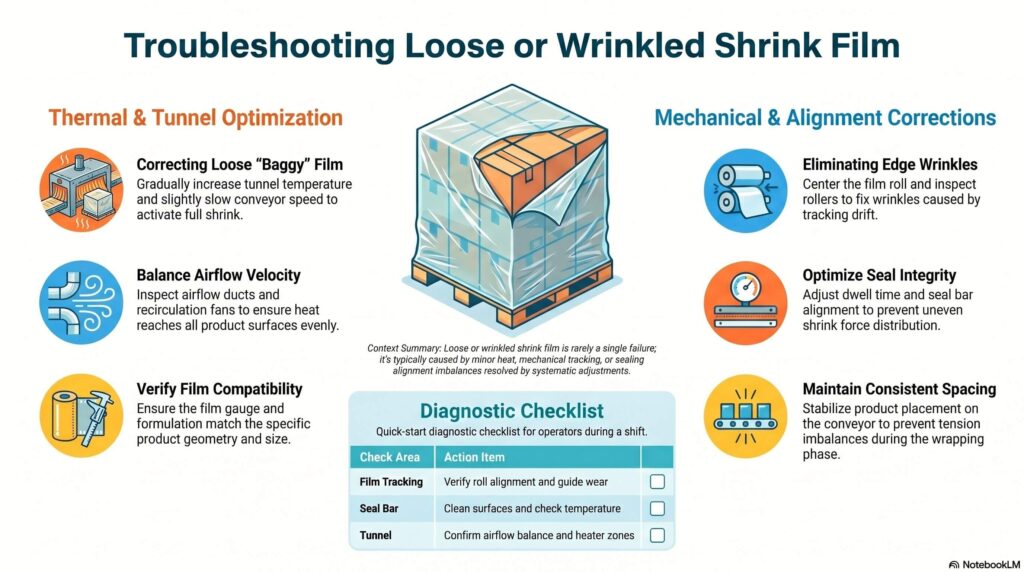
Fast troubleshooting starts with identifying whether the issue is mechanical, thermal, or material related.
- A simple diagnostic checklist includes:
- Confirm film tracking alignment
- Verify seal bar condition
- Inspect tunnel airflow
- Check conveyor speed consistency
- Evaluate film compatibility
When teams follow structured troubleshooting routines, they reduce downtime and avoid unnecessary adjustments. Operators often correct persistent wrinkles more quickly after working through how to diagnose and fix common shrink packaging issues. SPS offers operator training. Our film customers enjoy regular visits from our team for continued support and coaching on shrink performance.
Do Film Type and Application Style Influence Wrinkling?
Material selection plays a major role in shrink performance. Different applications require different shrink behaviors.
Examples include:
- Standard shrink packaging film for general bundling
- Specialty films for irregular product shapes
- Labeling materials used with shrink sleeve labels & shrink bands that require controlled shrink characteristics
- Printed shrink film for retail packaging and branding
Matching film type to product geometry improves consistency and reduces wrinkle formation.
How Do Maintenance and Setup Practices Prevent Recurring Film Problems?
Preventive maintenance supports stable shrink performance across shifts and product runs.
Best practices include:
- Inspecting seal bars daily
- Verifying roller condition weekly
- Monitoring tunnel airflow regularly
- Recording setup settings between changeovers
Consistent maintenance reduces variability across shrink packaging systems and helps operators respond faster when issues appear.
Operations that prioritize setup discipline often see fewer appearance defects and less material waste.
Why Do Some Facilities Experience Fewer Wrinkling Issues Than Others?
Facilities with strong setup procedures, trained operators, and consistent maintenance routines usually achieve better shrink results.
These teams often focus on:
- Standardized setup procedures
- Predictable film selection
- Stable product spacing
- Clear troubleshooting workflows
- Working with experts like SPS for continued performance
This approach reflects the operational reliability many teams associate with the SPS difference, where consistent packaging performance supports long term uptime and product quality.
Loose or wrinkled shrink film rarely comes from a single cause. Instead, it usually reflects small adjustments needed across film tracking, sealing alignment, tunnel airflow, or material selection. When you evaluate these areas systematically, your shrink packaging results become more predictable and easier to maintain across production shifts, and if persistent wrinkles continue to affect output consistency you can always contact us for support tailored to your packaging operation.